
The CRiTical Curve
Every technology has a curve: a rise, a peak, a decline. But some curves don’t end because they’re finished. They end because we stop following them.
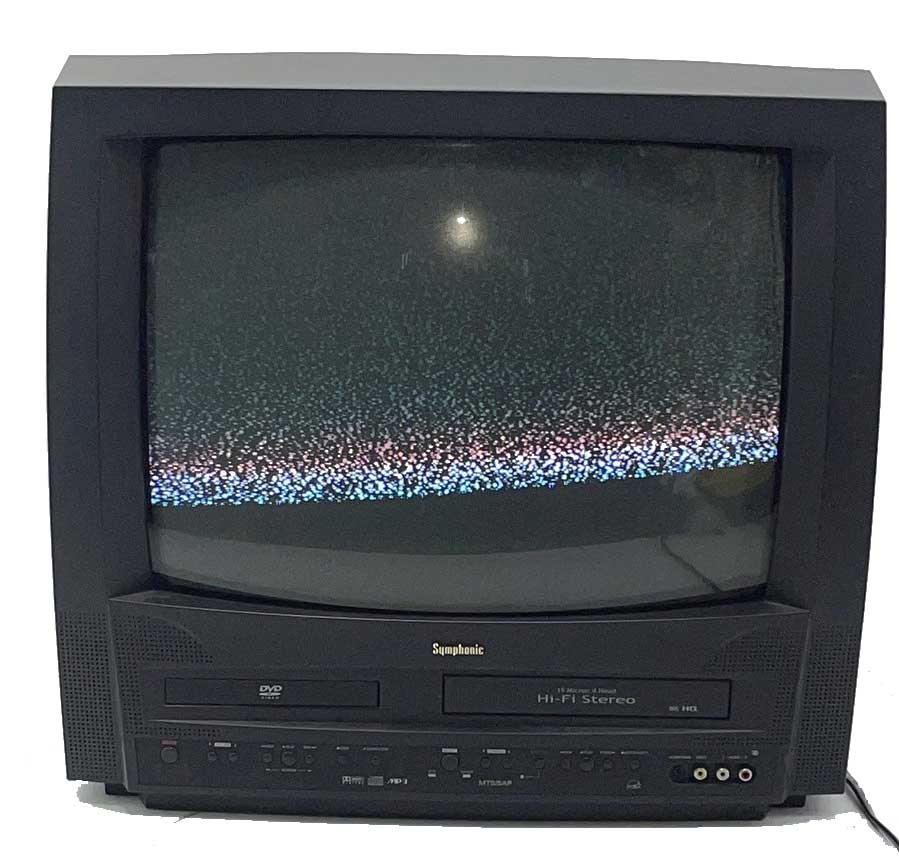 A Familiar Fade
Those of us born in the ’90s remember the quiet fade out of the Cathode Ray Tube television. One day it was the center of the living room; the next, it was being wrestled out the door to make space for a thin, futuristic slab that looked like it beamed in from TRON. CRTs were heavy, inconvenient, and unapologetically physical. Watching TV was never instant. It was a process.
You argued about what to watch. You cracked open the VHS. You fed it to the VCR. The screen bloomed from black to blue, snow hissing until someone found the remote to silence the banshee static. There was the soft pop, the slow warm-up, the faint hum. The high-pitched whine you didn’t notice until someone older said they couldn’t hear it. The static cling occurs when your hand brushes the glass. Even the smell — warm dust and ozone.
CRT television wasn’t just something you watched…It was something you experienced.
When Screens Felt Alive
Modern screens are marvels — razor sharp, impossibly thin, buttery smooth. But they flattened more than the glass. They flattened the presence. The glow. That phosphor luminescence that made Saturday morning cartoons feel electric and late-night movies feel dangerous. Everything felt like an event because the screen itself felt alive.
And that curve mattered.
The glass wasn’t bowed because engineers lacked ambition. It was bowed because it had to be. A beam of electrons sweeping across a screen demands a shape that can hold it. That gentle outward arc wasn’t a flaw; it was the medium’s heartbeat, shaping light moment by moment.
A Curve Cut Short
In a strange way, CRT technology followed the same geometry. A long rise. A bright crest. Then a sudden drop as the world pivoted toward thinner, lighter, cheaper. CRTs were still improving — better phosphors, cleaner geometry, quieter power systems — when the curve was cut short.
Imagine where it might have gone. Microfabricated emitters replacing bulky electron guns. Slim vacuum panels instead of massive glass bulbs. Modern phosphors with deeper blacks, brighter highlights, and that unmistakable analog glow. Cool, silent power supplies. A CRT that could’ve stood shoulder to shoulder with a modern OLED but looked nothing like it.
The tragedy isn’t merely that CRTs died…the real tragedy is that they died unfinished.
The Afterlife of Analog
Today, they live strange afterlives. Most are gone, recycled, scrapped, or forgotten. But gamers know modern flat screens can’t fake that glow. Broadcast professionals still rely on CRTs to reveal motion and contrast that modern panels gloss over. And some people simply kept theirs not for editing accuracy or nostalgia, but simply because the hum felt like home.
Recycling them is difficult and costly. Heavy glass, lead components, and fragile tubes are evidence of how fast the world moved on, leaving glowing artifacts in its wake.
And yet, CRTs are quietly returning. Not to big box stores or retail, but to retro bars, gaming lounges, art spaces, and small online communities dedicated to restoration. People are rediscovering the curve, the glow, and the feeling that something human disappeared when everything went flat.
The Question That Remains on the CRiTical Curve
Time will tell if CRTs remain a dead language,
or simply one waiting to be spoken again.